
Heart health is something many people tend to take for granted until they experience symptoms such as chest pain, breathlessness or unusual fatigue. Sometimes, these symptoms may indicate that the heart is not receiving enough oxygen-rich blood due to narrowed or blocked arteries.
One of the commonly recommended treatments for certain types of coronary artery blockages is angioplasty. It is a minimally invasive procedure that helps restore blood flow to the heart by opening narrowed arteries. In many cases, it can relieve chest pain, improve blood circulation and help reduce heart-related complications.
However, not every patient with a heart problem needs angioplasty. The decision depends on the severity of the blockage, symptoms, medical history and overall heart condition.
Understanding what angioplasty is, why it is performed and when a patient may need it can help individuals make informed decisions about their heart health.
1. Understanding Angioplasty: What Is It?
Angioplasty, also known as coronary angioplasty or Percutaneous Coronary Intervention (PCI), is a medical procedure used to open narrowed or blocked coronary arteries.
Coronary arteries are the blood vessels responsible for supplying oxygen-rich blood to the heart muscle. Over time, fatty deposits called plaque can build up inside these arteries. This condition is known as atherosclerosis.
As plaque accumulates, the arteries become narrower, restricting the flow of blood to the heart. When the blood supply becomes insufficient, a person may experience chest discomfort, breathlessness or other symptoms of coronary artery disease.
Angioplasty helps improve blood circulation by widening the affected artery.
How Does Angioplasty Work?
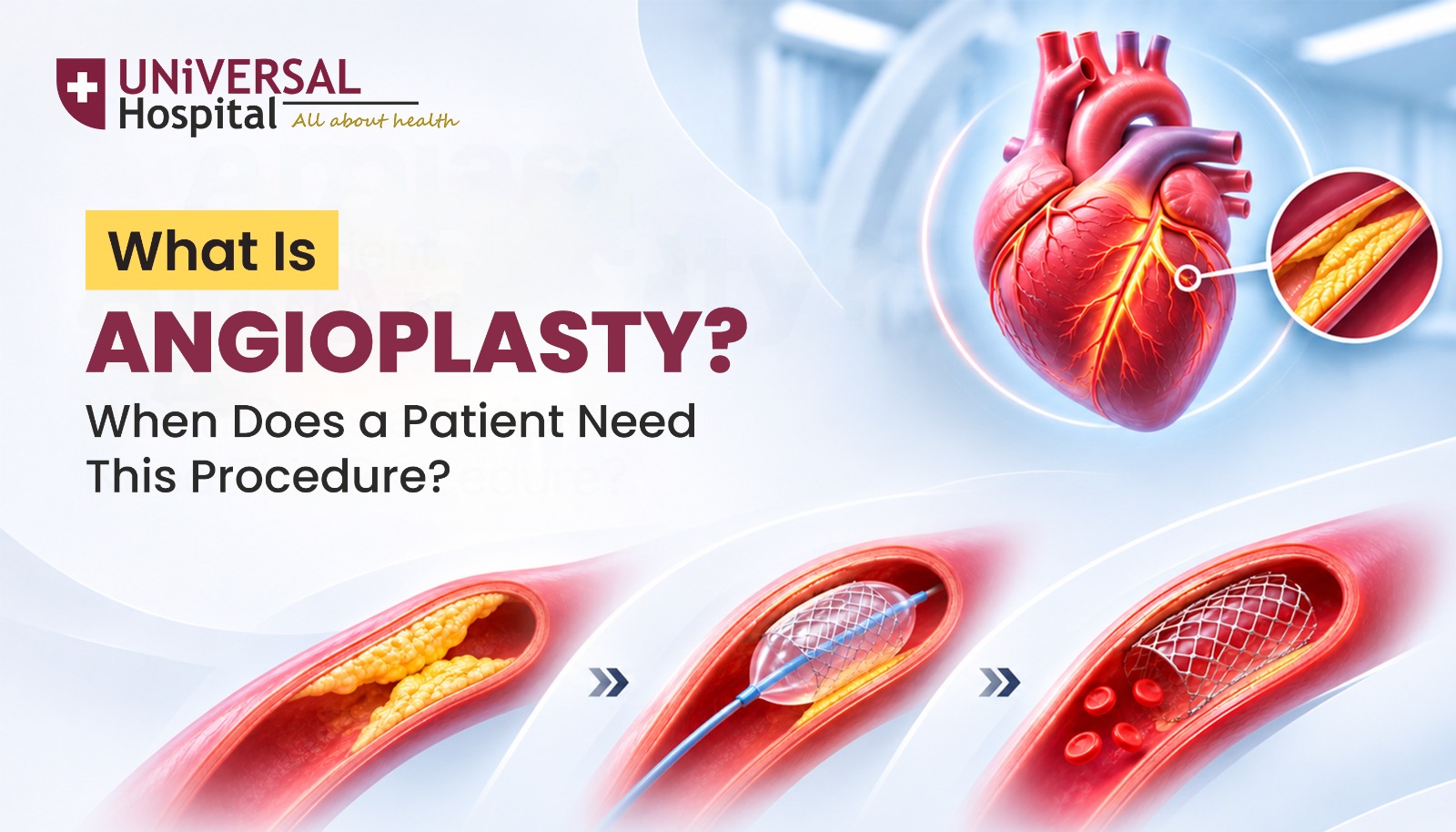
During the procedure, a cardiologist uses a thin, flexible tube called a catheter to reach the narrowed artery. A small balloon attached to the catheter is inflated at the site of the blockage to widen the artery.
In most cases, a small metal mesh tube called a stent is placed inside the artery to help keep it open and maintain proper blood flow.
The procedure generally involves the following steps:
- Initial assessment: The doctor evaluates the patient’s symptoms, medical history and test results.
- Catheter insertion: A thin catheter is inserted through a blood vessel, usually in the wrist or groin.
- Identifying the blockage: Using X-ray imaging and contrast dye, the cardiologist identifies the narrowed section of the coronary artery.
- Balloon inflation: A small balloon is inflated to widen the narrowed artery.
- Stent placement: If required, a stent is placed to help keep the artery open.
- Recovery and monitoring: The catheter is removed, and the patient is monitored for recovery and possible complications.
Angioplasty is usually performed under local anaesthesia, and the patient remains awake during the procedure. The duration and recovery time depend on the patient’s condition and the complexity of the blockage.
2. Causes of Blocked Heart Arteries
The most common reason a person may need coronary angioplasty is coronary artery disease (CAD). This condition develops when plaque gradually builds up inside the coronary arteries, making it difficult for blood to reach the heart muscle.
Several factors can increase the risk of plaque formation and artery narrowing.
Common Causes and Risk Factors
- High Cholesterol
High levels of LDL (bad cholesterol) can contribute to fatty deposits inside the arteries. Over time, these deposits may narrow the blood vessels and restrict blood circulation.
- High Blood Pressure
Uncontrolled blood pressure can damage artery walls and increase the risk of plaque accumulation, making the arteries less flexible.
- Diabetes
People with diabetes have a higher risk of developing cardiovascular diseases. High blood sugar levels can damage blood vessels and accelerate the development of atherosclerosis.
- Smoking and Tobacco Consumption
Smoking damages the blood vessels, reduces oxygen supply and increases the risk of blood clot formation. It is also an important risk factor for heart attacks.
- Obesity and Physical Inactivity
Excess body weight and a sedentary lifestyle can contribute to high cholesterol, diabetes and high blood pressure, increasing the risk of coronary artery disease.
- Family History and Age
A family history of heart disease can increase a person’s risk. The chances of developing coronary artery disease also increase with age.
- Unhealthy Eating Habits
Regular consumption of foods high in saturated fats, trans fats and excess salt can contribute to cholesterol problems, high blood pressure and poor cardiovascular health.
It is important to understand that these risk factors do not automatically mean a person will need angioplasty. However, managing them can help reduce the chances of developing serious heart complications.
People also may yellow water in Surat about medical information: Yellow Water in Surat: Possible Health Risks, Diseases and Safety Measures
3. Common Symptoms of Blocked Heart Arteries
One of the biggest concerns with coronary artery disease is that symptoms may develop gradually. Some people may experience mild discomfort initially, while others may have a sudden cardiac emergency.
Recognising the warning signs early can help patients seek medical attention before the condition becomes more serious.
Symptoms You Should Not Ignore
- Chest Pain or Discomfort: A feeling of pressure, tightness, heaviness or squeezing in the chest. This is commonly known as angina.
- Shortness of Breath: Difficulty breathing during physical activity or even while resting in advanced cases.
- Pain in Other Body Parts: Discomfort may spread to the arms, shoulders, back, neck, jaw or upper abdomen.
- Unusual Fatigue: Feeling excessively tired during everyday activities without an obvious reason.
- Dizziness or Light-headedness: Reduced blood supply or other cardiac problems may cause dizziness or fainting.
- Cold Sweating: Sudden sweating, especially when accompanied by chest discomfort, can be a warning sign of a heart attack.
- Nausea: Some patients may experience nausea, vomiting or indigestion-like discomfort during a cardiac event.
When Should You Seek Emergency Medical Attention?
Chest discomfort that lasts for several minutes, returns repeatedly or occurs along with breathlessness, sweating, nausea or pain in the arm or jaw may indicate a heart attack.
Do not wait for the symptoms to disappear on their own. Call emergency medical services immediately. Do not drive yourself to the hospital.
Not everyone experiences the typical symptoms of a heart attack. Older adults and people with diabetes may sometimes have less obvious warning signs.
4. When Does a Patient Need Angioplasty?
Angioplasty is recommended when a narrowed or blocked coronary artery significantly affects blood supply to the heart and the expected benefits of the procedure outweigh its risks.
However, the decision is not based on the percentage of blockage alone. Cardiologists also consider the location of the blockage, symptoms, heart function, medical history and results of diagnostic tests.
Situations Where Angioplasty May Be Recommended
- Severe Coronary Artery Blockage
When plaque buildup significantly narrows a coronary artery, the heart may not receive enough oxygen-rich blood. If the blockage is causing symptoms or affecting heart function, angioplasty may be considered.
- Persistent Chest Pain Despite Medication
Some patients experience recurring chest pain even after taking prescribed medicines and making lifestyle changes. If investigations identify a treatable narrowing, angioplasty may help improve blood flow and relieve symptoms.
- During a Heart Attack
A heart attack usually occurs when blood flow through a coronary artery becomes suddenly blocked, often due to a blood clot forming over a disrupted plaque.
In such emergencies, primary angioplasty may be performed to reopen the blocked artery as quickly as possible and restore blood supply to the heart muscle.
Early treatment is extremely important because prolonged interruption of blood flow can cause permanent damage to the heart.
- Reduced Blood Flow to the Heart
Diagnostic investigations may reveal that a narrowed artery is restricting blood supply to a particular area of the heart. Depending on the findings and the patient’s condition, the cardiologist may recommend angioplasty.
- High-Risk or Complex Coronary Artery Disease
Some patients have multiple narrowed arteries or blockages in important areas of the coronary circulation. These cases require careful assessment by an experienced cardiac team to determine whether angioplasty, medication or bypass surgery is the most suitable option.
Does Every Heart Blockage Require Angioplasty?
No. A patient with a detected heart blockage does not necessarily need angioplasty.
Some patients can be managed with medication, regular monitoring and lifestyle modifications. Others may benefit from angioplasty or coronary artery bypass grafting (CABG).
The treatment plan should always be based on an individual cardiac assessment rather than a blockage percentage alone.
5. How Is Angioplasty Diagnosed and Performed?
Before recommending angioplasty, the cardiologist evaluates the patient’s heart condition through clinical examination and appropriate diagnostic investigations.
Tests That Help Identify Heart Artery Blockages
Depending on the symptoms and medical history, the doctor may recommend:
- ECG (Electrocardiogram): Records the electrical activity of the heart and helps identify signs of a heart attack or abnormal heart rhythm.
- 2D Echocardiography: Uses ultrasound to assess the heart’s structure, pumping function and movement of the heart walls.
- TMT (Treadmill Test): Evaluates how the heart responds to physical activity and can help identify signs of reduced blood supply.
- CT Coronary Angiography: Uses CT imaging and contrast dye to examine the coronary arteries and identify narrowing.
- Coronary Angiography: A catheter-based imaging procedure that uses contrast dye and X-rays to identify the location and severity of coronary artery blockages.
Coronary angiography is particularly important when the cardiologist needs to examine the arteries in detail and decide whether an intervention is appropriate.
What Happens After Angioplasty?
Once the procedure is completed, the patient is shifted to a recovery area for observation.
The medical team monitors blood pressure, heart rate, the catheter insertion site and overall recovery.
Depending on the patient’s condition, the hospital stay may range from the same day or the following day for planned procedures to several days after an emergency angioplasty.
The doctor also prescribes medicines to reduce the risk of blood clots and other complications.
6. Treatment Options for Coronary Artery Disease
Angioplasty is an effective treatment for selected patients, but it is not the only option for managing coronary artery disease. The right approach depends on the patient’s condition, severity of blockage and overall cardiac health.
1. Medication and Lifestyle Management
Patients with mild or stable coronary artery disease may be treated with medication and lifestyle changes.
The doctor may prescribe medicines to:
- Control cholesterol levels.
- Manage high blood pressure.
- Reduce the risk of blood clot formation.
- Control chest pain and improve heart function.
- Manage diabetes and other associated conditions.
Regular exercise, a heart-healthy diet, smoking cessation and weight management are also important parts of treatment.
2. Coronary Angioplasty with Stenting
Angioplasty is recommended when opening a narrowed artery is expected to improve blood flow and provide clinical benefits.
A balloon is used to widen the affected artery, and a stent is generally placed to help maintain the opening.
Modern drug-eluting stents release medication that helps reduce the chances of the treated artery narrowing again.
3. Coronary Artery Bypass Surgery (CABG)
In patients with multiple severe blockages, complex coronary artery disease or certain high-risk conditions, coronary artery bypass surgery may be a more suitable option.
During this procedure, a healthy blood vessel from another part of the body is used to create a new route for blood to flow around the blocked artery.
The cardiologist and cardiac surgery team determine the most appropriate treatment after evaluating the patient’s condition.
Recovery and Precautions After Angioplasty
Recovery after angioplasty is generally quicker than recovery after major heart surgery. However, patients must follow medical instructions to protect their heart health.
Some important precautions include:
- Take all prescribed medicines on time, particularly blood-thinning medicines.
- Do not stop antiplatelet medication without consulting your cardiologist.
- Avoid heavy lifting and strenuous physical activity until your doctor permits it.
- Follow a balanced diet with limited saturated fats, excess salt and processed foods.
- Stop smoking and avoid tobacco consumption.
- Keep blood pressure, cholesterol and blood sugar levels under control.
- Attend regular cardiac follow-up appointments.
- Ask your doctor about cardiac rehabilitation and suitable exercise routines.
Patients should also understand that angioplasty treats the narrowed section of the artery but does not completely cure coronary artery disease. Continued medical care and lifestyle changes remain essential.
7. Why Choose Universal Hospital for Angioplasty and Advanced Cardiac Care?
When it comes to heart health, choosing the right hospital and cardiac specialist is an important decision. Patients need accurate diagnosis, timely treatment, advanced medical facilities and compassionate support throughout their healthcare journey.
Universal Hospital, Surat, offers specialised cardiology services with a focus on comprehensive heart care, from early diagnosis and emergency management to advanced interventional procedures.
Advanced Cardiac Facilities
Universal Hospital provides specialised facilities to support the diagnosis and treatment of various cardiovascular conditions.
Some of its advanced cardiac facilities include:
- Advanced GE Cath Lab: Equipped with advanced imaging technology, Autoright software and on-table CT scan screening to support cardiac procedures.
- Integrated IVUS and FFR: Helps cardiologists assess coronary artery conditions and evaluate the functional significance of blockages during selected procedures.
- On-Table Rotablation: An advanced technique available for treating selected complex, heavily calcified coronary artery blockages.
- Comprehensive Cardiac Diagnostics: Facilities include ECG, 2D Echo, TMT, CT Coronary Angiography and other cardiac investigations.
- Emergency Cardiac Care: Dedicated emergency support for patients experiencing chest pain and other serious cardiac symptoms.
Experienced Interventional Cardiology Care
The cardiology department is supported by experienced specialists, including interventional cardiologist Dr. Sanjay Vaghani, who has more than 13 years of experience.
The team focuses on evaluating individual cardiac conditions and recommending suitable treatment options based on medical requirements.
Comprehensive and Compassionate Patient Care
Heart-related conditions can be stressful for both patients and their families. At Universal Hospital, the focus extends beyond medical procedures to include timely assessment, patient guidance, continuous monitoring and support during recovery.
Whether a patient requires cardiac evaluation, coronary angiography, angioplasty or ongoing heart disease management, the hospital aims to provide coordinated care at every stage.
If you or someone in your family is experiencing recurring chest pain, breathlessness or other possible symptoms of coronary artery disease, do not delay medical consultation.
Choose Universal Hospital, Surat, for expert cardiac evaluation, advanced angioplasty facilities and compassionate heart care. Consult the cardiology team today and take an important step towards protecting your heart health.
Frequently Asked Questions (FAQs)
1. Is angioplasty a major surgery?
No. Angioplasty is a minimally invasive procedure. It is performed using a catheter inserted through a blood vessel, usually in the wrist or groin. It does not generally require major surgical incisions.
2. How long does an angioplasty procedure take?
A routine angioplasty may take approximately 30 minutes to 2 hours. However, the duration depends on the number of blockages, their location and the complexity of the procedure.
3. Is angioplasty safe?
Angioplasty is a commonly performed cardiac procedure and is generally safe when recommended for appropriate patients. However, like any medical procedure, it carries potential risks, including bleeding, blood vessel damage, blood clots, heart attack and stroke. The risks depend on the patient’s overall health and medical condition.
4. How many days does it take to recover after angioplasty?
Many patients undergoing planned angioplasty can return home the same day or the following day. Most can gradually resume normal activities within a few days to a week, depending on their recovery and doctor’s advice. Recovery after emergency angioplasty may take longer.
5. Can heart blockage happen again after angioplasty?
Yes. Although a stent helps keep the treated artery open, coronary artery disease can continue to progress in other areas. In some cases, the treated artery may also narrow again. Taking prescribed medicines, controlling risk factors and attending regular follow-ups are important.
6. Is angioplasty better than bypass surgery?
Neither procedure is universally better. Angioplasty may be suitable for certain patients with specific blockages, while bypass surgery may offer better outcomes for some patients with complex or extensive coronary artery disease. The decision should be made after a detailed cardiac evaluation.
7. What is the difference between angiography and angioplasty?
Angiography is a diagnostic procedure used to examine blood vessels and identify blockages. Angioplasty is a treatment procedure used to open narrowed or blocked arteries and improve blood circulation. In selected cases, both procedures may be performed during the same treatment session.

Comment 2