
Introduction
Access to clean drinking water is essential for good health. However, when tap water appears yellow, cloudy or discoloured, it can raise concerns about its quality and safety.
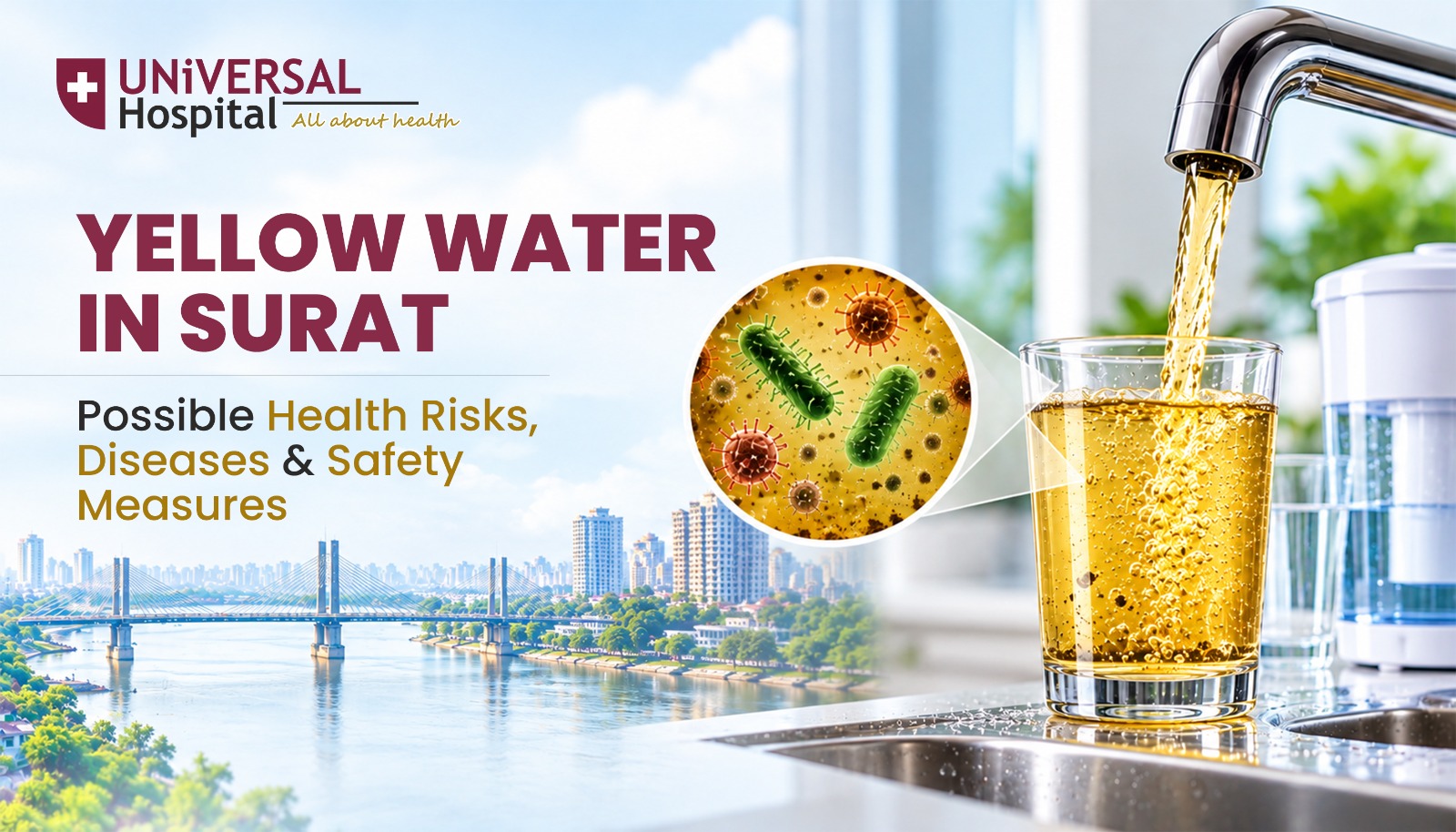
With residents expressing concerns about yellow or discoloured water in parts of Surat, it is important to understand the possible health risks and the precautions families should take. Although yellow water may result from rust, sediment or changes in the water distribution system, its appearance alone cannot confirm whether it is contaminated.
At Universal Hospital Surat, we believe that health awareness and timely medical attention play an important role in protecting individuals and families.
In this blog, we explain the possible health risks associated with contaminated drinking water, symptoms to watch for and practical steps you can take to protect your family.
What Causes Yellow Water in Surat?
Yellow or brown water can occur for several reasons. Identifying the exact cause requires appropriate water-quality testing.
1. Rust and corrosion in pipelines
Older or corroded water pipes may release iron particles and rust, causing water to appear yellow, orange or brown.
2. Sediment in the water supply
Soil, silt and other particles can enter or accumulate in water distribution systems. Changes in water pressure or pipeline maintenance may disturb these deposits.
3. Leakage or problems in distribution lines
Damaged pipelines and certain distribution-system failures can affect water quality. In some situations, they may also allow harmful contaminants to enter the supply.
4. Possible microbial or chemical contamination
Water can contain harmful microorganisms or chemicals even when it looks clear. Similarly, discoloured water does not automatically mean that disease-causing organisms are present.
For this reason, residents should report unusual water quality to the relevant authorities and follow official safety advisories.
Which Diseases Can Spread Through Contaminated Drinking Water?
If drinking water contains specific disease-causing microorganisms, consuming it may lead to infections and other health problems.
1. Diarrhoea and Gastroenteritis
Contaminated water can carry bacteria, viruses or parasites that cause digestive infections.
Common symptoms include:
- Loose or frequent stools
- Abdominal cramps
- Nausea and vomiting
- Fever in some cases
- Weakness and dehydration
Persistent diarrhoea can cause significant fluid loss, particularly in children and older adults. Seek medical advice if symptoms are severe or continue.
2. Typhoid Fever
Typhoid fever is a bacterial infection that spreads through food or water contaminated with Salmonella Typhi.
Symptoms may include:
- Persistent fever
- Headache and fatigue
- Abdominal discomfort
- Loss of appetite
- Changes in bowel habits
If you develop a persistent fever after possible exposure to unsafe water, consult a doctor for appropriate evaluation and testing.
3. Cholera
Cholera is an intestinal infection caused by Vibrio cholerae. It can spread through water or food contaminated with the bacteria.
Warning signs include:
- Sudden, profuse watery diarrhoea
- Vomiting
- Rapid fluid loss
- Severe dehydration
Cholera can become life-threatening without prompt treatment. Severe watery diarrhoea requires urgent medical attention.
4. Hepatitis A and Jaundice
Hepatitis A is a viral infection that can spread through contaminated food or water. It affects the liver and may cause jaundice.
Possible symptoms include:
- Fatigue and weakness
- Nausea or vomiting
- Abdominal discomfort
- Dark-coloured urine
- Yellowing of the eyes or skin
Yellow water does not directly cause jaundice simply because of its colour. The risk depends on whether it contains the virus or another harmful contaminant.
5. Dysentery
Certain bacteria and parasites can cause dysentery after contaminated food or water is consumed.
Symptoms may include:
- Diarrhoea containing blood or mucus
- Abdominal pain and cramps
- Fever
- Pain during bowel movements
Blood in the stool should not be ignored and requires prompt medical assessment.
Important: These illnesses are possible consequences of consuming water contaminated with particular pathogens. The presence of yellow water alone does not confirm that these diseases are spreading in Surat.
What Should You Do If Your Tap Water Is Yellow?
Taking immediate precautions can help reduce the risk of exposure to potentially unsafe water.
1. Stop Using the Affected Water for Drinking
Until its safety is confirmed, avoid using visibly discoloured or unusual-smelling water for drinking, cooking, brushing teeth, making ice or preparing infant formula.
Use sealed bottled water from a reliable source or another verified safe water supply.
2. Boil Water When Microbial Contamination Is the Concern
Boiling water at a rolling boil for at least one minute can kill many disease-causing microorganisms.
However, boiling does not remove rust, heavy metals or many chemical contaminants. If the type of contamination is unknown, use a verified safe alternative and follow official instructions.
3. Report the Problem to the Authorities
Residents should report yellow, brown or cloudy tap water to the Surat Municipal Corporation (SMC).
Request an inspection and appropriate water-quality testing, particularly if several households in the same area are experiencing the problem.
Official resource: https://www.suratmunicipal.gov.in/
4. Maintain Household Water Storage Systems
Keep drinking-water containers clean and covered. Ensure overhead and underground tanks are inspected and cleaned periodically.
If the incoming water supply is contaminated, cleaning a storage tank alone will not resolve the underlying issue.
5. Do Not Rely Only on Water Filters
Different filters remove different contaminants. Some improve water clarity but may not remove harmful microorganisms or dissolved chemicals.
Choose a suitable treatment system based on the water-quality results and the manufacturer’s specifications.
How Can You Protect Your Family From Waterborne Diseases?
Simple preventive measures can help reduce the risk of waterborne infections.
- Drink water from a verified safe source.
- Wash your hands with soap before eating and after using the toilet.
- Wash fruits and vegetables with safe water.
- Use safe water for cooking and preparing beverages.
- Keep water containers covered and clean.
- Follow official municipal water-quality updates.
- Avoid self-medication if symptoms develop.
- Consult a healthcare professional if you experience persistent fever, diarrhoea or vomiting.
These precautions are especially important for young children, older adults and people with weakened immune systems.
When Should You Consult a Doctor?
After possible exposure to unsafe drinking water, watch for symptoms such as diarrhoea, vomiting, fever, abdominal pain, unusual weakness or signs of dehydration.
Seek prompt medical attention if you experience persistent symptoms. Severe dehydration, bloody diarrhoea, confusion, fainting or an inability to keep fluids down requires urgent medical care.
Yellowing of the eyes or skin, especially with dark urine or other symptoms, also requires medical evaluation.
A doctor may recommend blood tests, stool tests or other investigations depending on your symptoms and medical history. Treatment will depend on the underlying cause.
Do not wait for symptoms to become severe, particularly in children and older adults.
How Universal Hospital Surat Can Help
At Universal Hospital Surat, patient health and timely medical evaluation are important priorities.
If you or a family member develops symptoms such as persistent fever, diarrhoea, vomiting, abdominal discomfort or dehydration after possible exposure to unsafe water, seek medical advice.
A qualified healthcare professional can assess your symptoms, recommend appropriate investigations and guide you towards suitable treatment.
Early medical evaluation can help identify the cause of illness and reduce the risk of complications.
Conclusion
Yellow water in Surat is a reason to take precautions, but its colour alone cannot determine whether it is contaminated or whether a particular disease risk exists.
The safest approach is to avoid consuming questionable water, use a verified safe alternative, report the issue to the municipal authorities and follow official water-quality guidance.
Understanding the symptoms of waterborne illnesses and seeking timely medical advice can help protect your family from avoidable complications.
Your health matters. If you experience symptoms that may be related to contaminated water, consult a qualified healthcare professional at Universal Hospital Surat for appropriate evaluation and care.
Frequently Asked Questions
1. Is yellow tap water safe to drink?
Not necessarily. It may contain rust or sediment, but it may also indicate a water-quality problem. Avoid drinking it until its safety has been confirmed.
2. Can yellow water cause typhoid or jaundice?
Only if the water contains the relevant disease-causing organism. Yellow colour alone does not establish the presence of typhoid bacteria or the hepatitis A virus.
3. Does boiling yellow water make it safe?
Boiling can kill many disease-causing microorganisms but does not remove heavy metals or many chemicals. Use an alternative verified safe water source if contamination is unknown.
4. What are the symptoms of waterborne diseases?
Symptoms may include diarrhoea, vomiting, fever, abdominal pain and dehydration. The exact symptoms depend on the infection or contaminant.
5. What should Surat residents do if their water supply looks yellow?
Avoid consuming the affected water, use a verified safe alternative, report the issue to the Surat Municipal Corporation and follow official water-quality advisories.
Medical disclaimer: This article is intended for general health awareness and does not replace professional medical advice. The possible risks discussed depend on the actual cause and quality of the affected water. The article should be reviewed by a qualified doctor before publication.
