
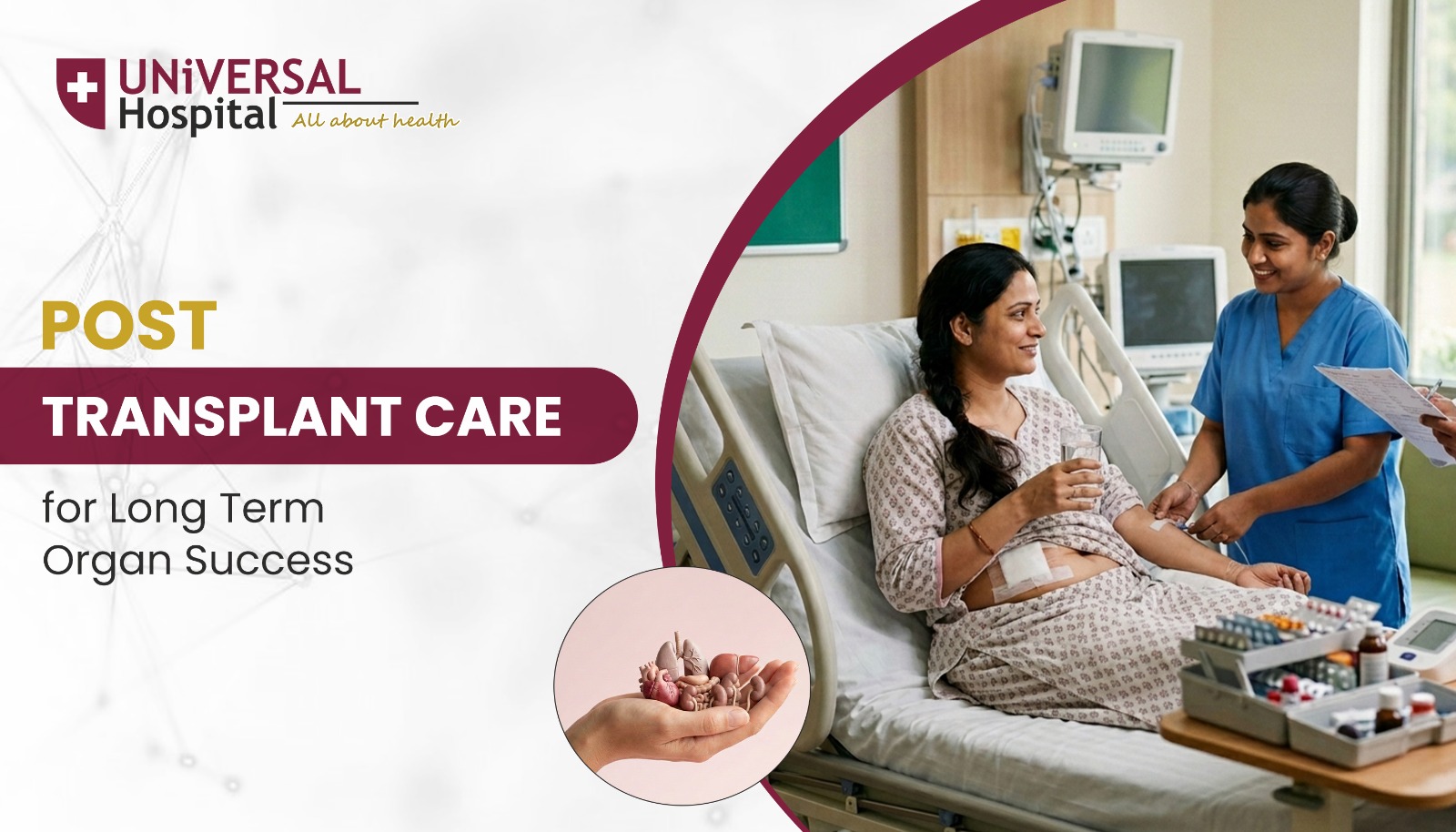
An organ transplant can be life-changing. Whether it is a kidney, liver, heart, or bone marrow transplant, the procedure offers patients a second chance at life. However, successful transplantation does not end after surgery. Long-term recovery and organ health depend heavily on proper post-transplant care.
After transplantation, patients must carefully manage medications, maintain healthy habits, attend regular transplant follow-up visits, and monitor for possible complications. These steps are essential to help the body accept the transplanted organ and ensure long-term success.
At Universal Hospital Surat, comprehensive Transplant Services focus not only on successful transplant surgery but also on long-term recovery, monitoring, and compassionate patient support.
In this blog, we will discuss:
- What post-transplant care involves
- Importance of immunosuppression
- Medication management
- Lifestyle modifications after transplant
- Monitoring and follow-up care
- Emotional wellness and recovery
- Why Universal Hospital is trusted for transplant services
What Is Post-Transplant Care?Understanding Post-Transplant Care
Post-transplant care refers to the medical and lifestyle management required after receiving an organ transplant.
The body naturally recognizes the transplanted organ as foreign. Without proper care and medications, the immune system may attack the new organ, leading to rejection.
Post-transplant management helps:
- Protect the transplanted organ
- Prevent rejection
- Reduce infection risk
- Improve quality of life
- Ensure long-term transplant success
Proper care is essential for every transplant recipient.
Why Post-Transplant Care Is So Important
Transplant surgery is only the beginning of the recovery journey.
Long-term success depends on:
- Taking medications correctly
- Maintaining healthy habits
- Attending regular medical checkups
- Monitoring organ function
Ignoring follow-up care can increase the risk of:
- Organ rejection
- Infections
- Medication complications
- Reduced organ function
Consistent care significantly improves survival and long-term outcomes.
What Is Immunosuppression? Understanding Immunosuppression
After transplantation, patients must take medicines called immunosuppression drugs or immunosuppressants.
These medicines reduce the immune system’s activity to prevent rejection of the transplanted organ.
Why Immunosuppressive Medicines Are Necessary
The immune system is designed to attack anything it sees as foreign.
Without immunosuppression:
- The body may reject the transplanted organ
- Organ damage can occur
- Transplant failure may develop
These medicines help the body accept the new organ safely.
Common Immunosuppressive Medications
Doctors prescribe different medications depending on the transplant type and patient condition.
Common drugs include:
- Tacrolimus
- Cyclosporine
- Mycophenolate mofetil
- Steroids
Medication plans are personalized for every patient.
People also may know for Organ Donation information: Organ Donation: How Donors Save Lives Every Day
Importance of Medication Management
Medication adherence is one of the most critical aspects of post-transplant care.
Key Medication Tips
- Take medicines exactly as prescribed
- Never skip doses
- Maintain a consistent schedule
- Avoid self-adjusting medication doses
- Inform doctors about any side effects
Even missing a few doses can increase the risk of rejection.
Side Effects of Immunosuppression
While immunosuppressive medicines are life-saving, they may also cause side effects.
Common Side Effects Include:
- Increased infection risk
- High blood pressure
- Weight gain
- Diabetes
- Kidney function changes
- Bone weakness
Doctors carefully monitor patients to balance medication effectiveness and side effects.
Importance of Regular Transplant Follow-Up
Routine transplant follow-up visits are essential after surgery.
These appointments help doctors:
- Monitor organ function
- Detect early signs of rejection
- Adjust medications
- Identify complications early
Common Monitoring Tests
Transplant recipients may require:
- Blood tests
- Urine tests
- Imaging scans
- Blood pressure monitoring
- Organ function assessments
Regular testing ensures the transplanted organ remains healthy.
Warning Signs That Need Immediate Attention
Patients should contact their transplant team if they experience:
- Fever or infection symptoms
- Sudden swelling
- Pain near the transplant site
- Reduced urine output
- Breathing difficulty
- Extreme fatigue
Early medical attention can prevent serious complications.
Lifestyle Modifications After Organ Transplant
Healthy lifestyle choices are essential for protecting the transplanted organ.
Healthy Diet After Transplant
Nutrition supports healing, immunity, and long-term organ function.
Recommended Foods
- Fresh fruits and vegetables
- Lean proteins
- Whole grains
- Low-fat dairy products
- Adequate hydration
Foods to Limit
- Excess salt
- Sugary foods
- Processed and fried foods
- Alcohol (unless approved by doctor)
Patients should also avoid raw or undercooked food if infection risk is high.
Exercise and Physical Activity
Regular physical activity helps patients regain strength and maintain long-term health.
Benefits of Exercise After Transplant
- Improves circulation
- Reduces fatigue
- Maintains healthy weight
- Strengthens muscles and bones
- Supports mental health
Safe Activities Include
- Walking
- Stretching
- Light yoga
- Cycling
- Guided rehabilitation exercises
Exercise plans should be approved by the transplant team.
Preventing Infections After Transplant
Because immunosuppressive medications weaken the immune system, transplant recipients are more vulnerable to infections.
Infection Prevention Tips
- Wash hands frequently
- Avoid crowded places during recovery
- Stay updated with recommended vaccinations
- Wear masks when necessary
- Practice food hygiene
Prompt treatment of infections is extremely important after transplantation.
Mental and Emotional Health After Transplant
Recovery after transplantation affects emotional health as well as physical health.
Patients may experience:
- Anxiety about rejection
- Stress about medications
- Emotional adjustment challenges
- Fear of complications
Emotional Support Strategies
Helpful support includes:
- Counseling and therapy
- Family support
- Patient support groups
- Open communication with doctors
Mental wellness is an important part of successful transplant recovery.
Long-Term Organ Health and Monitoring
Transplant care continues for life.
Even years after surgery, patients need ongoing medical supervision.
Long-Term Care Focuses On:
- Organ function preservation
- Preventing chronic rejection
- Monitoring medication side effects
- Managing blood pressure and diabetes
- Maintaining overall health
Regular monitoring improves transplant survival rates significantly.
Importance of Sleep and Stress Management
Good sleep and stress control support recovery and immune health.
Helpful Habits Include
- Maintaining regular sleep schedules
- Practicing relaxation techniques
- Avoiding smoking and tobacco
- Reducing emotional stress
Healthy daily routines contribute to long-term transplant success.
Returning to Normal Life After Transplant
Many transplant recipients return to active and fulfilling lives.
Patients often regain:
- Energy and independence
- Ability to work or study
- Improved physical activity
- Better quality of life
However, maintaining discipline with medications and follow-up remains essential.
Family Support in Post-Transplant Recovery
Families play a major role in helping transplant patients recover successfully.
Family Support Can Include
- Medication reminders
- Emotional encouragement
- Assistance during follow-up visits
- Helping maintain healthy routines
Strong support systems improve patient confidence and recovery outcomes.
Advances in Modern Post-Transplant Care
Modern transplant medicine has improved dramatically.
Advances include:
- Safer immunosuppressive medicines
- Better organ monitoring techniques
- Reduced rejection rates
- Personalized transplant management
These developments are helping transplant recipients live longer and healthier lives.
Why Choose Universal Hospital for Transplant Services?
Choosing the right hospital is critical for successful transplantation and long-term recovery.
Universal Hospital Surat offers advanced and compassionate Transplant Services focused on both surgical excellence and lifelong patient care.
Experienced Transplant Specialists
The hospital has expert teams specializing in:
- Kidney transplantation
- Liver transplantation
- Post-transplant management
- Organ rejection monitoring
Every patient receives individualized care plans.
Advanced Monitoring and Diagnostic Facilities
Universal Hospital provides:
- Modern ICU and transplant units
- Advanced diagnostic technology
- High-quality laboratory monitoring
- Comprehensive organ function testing
These facilities support safe and effective recovery.
Personalized Post-Transplant Care
The hospital focuses on:
- Medication management
- Nutritional counseling
- Infection prevention
- Long-term transplant follow-up
This holistic approach improves transplant outcomes and quality of life.
Compassionate and Family-Centered Support
At Universal Hospital:
- Patients receive emotional and psychological support
- Families are guided throughout recovery
- Doctors ensure clear communication and education
The hospital believes successful transplantation requires both medical excellence and compassionate care.
Protect Your New Beginning with Proper Post-Transplant Care
A successful transplant offers a new opportunity for health and life. However, long-term success depends on careful post-transplant care, proper immunosuppression, and regular transplant follow-up.
With the right medical guidance, healthy lifestyle choices, and ongoing monitoring, transplant recipients can enjoy active and fulfilling lives for many years.
👉 Consult the transplant specialists at Universal Hospital Surat
👉 Access advanced transplant monitoring and recovery care
👉 Receive compassionate, lifelong transplant support
Choose Universal Hospital for trusted Transplant Services — where expert care helps protect every new beginning.
📍 Universal Superspeciality Hospital beside Jash Infinity, Behind New SMC Building, Civil Cross Road, Khatodara, Surat, India, 395001
📞 +91 90810 82632
🌐 www.universalhospitalsurat.com
