
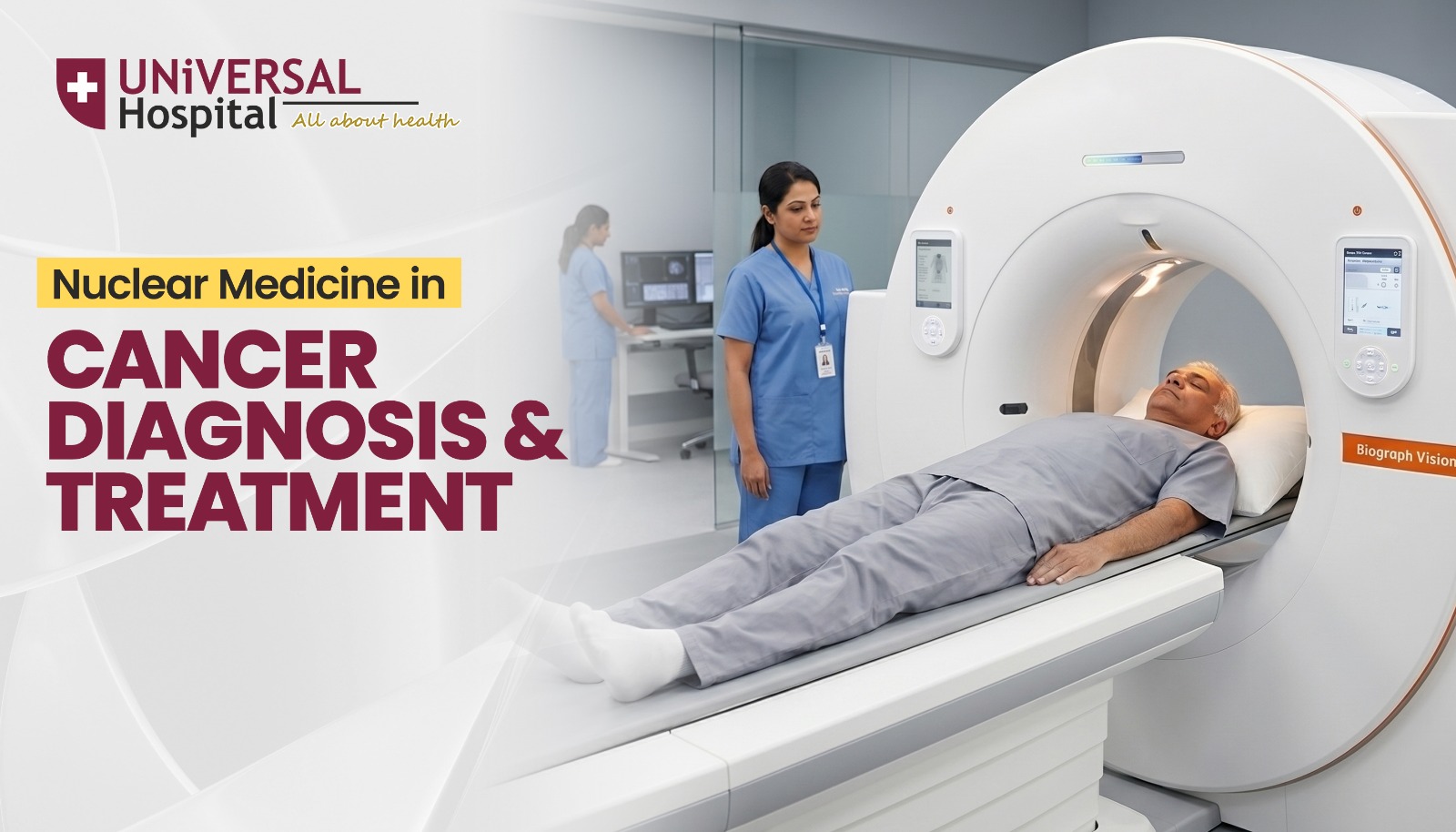
Cancer treatment today is becoming more precise, personalized, and effective than ever before. One of the biggest advancements in modern oncology is nuclear medicine — a specialized medical field that helps doctors diagnose, stage, and treat cancer with remarkable accuracy.
Unlike traditional imaging methods, nuclear medicine provides detailed information about how organs and tissues are functioning inside the body. This helps doctors detect cancer earlier, monitor treatment response, and plan targeted therapies more effectively.
For patients undergoing cancer evaluation or treatment, understanding the role of PET scans, radioactive tracers, and nuclear therapy can reduce anxiety and improve confidence in the treatment journey.
At Universal Hospital Surat, advanced Cancer Care & Oncology services combine cutting-edge diagnostic technology with compassionate patient care.
In this blog, we’ll explore:
- What nuclear medicine is
- How it helps in cancer diagnosis
- The role of PET scans
- Nuclear therapy treatments
- Safety and accuracy of procedures
- Benefits for cancer patients
- Why Universal Hospital is trusted for advanced oncology care
What Is Nuclear Medicine? Understanding Nuclear Medicine
Nuclear medicine is a specialized branch of medical imaging and treatment that uses small amounts of radioactive substances called radiotracers.
These radiotracers help doctors:
- Detect abnormal cells
- Evaluate organ function
- Diagnose diseases early
- Monitor treatment effectiveness
Unlike regular scans that mainly show structure, nuclear medicine shows how tissues and organs function in real time.
This makes it extremely valuable in cancer diagnosis and treatment planning.
How Nuclear Medicine Works
Radiotracers are introduced into the body through:
- Injection
- Swallowing
- Inhalation
These tracers travel to specific organs or tissues and emit signals detected by special imaging machines.
The imaging system creates detailed pictures showing abnormal metabolic activity often associated with cancer cells.
Cancer cells usually grow faster than normal cells, making them easier to detect with nuclear imaging.
Role of Nuclear Medicine in Cancer Diagnosis
Early and accurate diagnosis is critical for successful cancer treatment.
Why Nuclear Medicine Is Important
It helps doctors:
- Detect cancer at an early stage
- Identify tumor location
- Determine whether cancer has spread
- Evaluate treatment response
- Detect recurrence after treatment
This improves treatment planning and patient outcomes.
PET Scan: A Powerful Diagnostic Tool
What Is a PET Scan?
A PET scan (Positron Emission Tomography) is one of the most widely used nuclear medicine imaging tests in oncology.
It uses a radioactive glucose tracer because cancer cells consume more sugar than normal cells.
Areas with high activity appear clearly on the scan.
Conditions Commonly Evaluated with PET Scan
PET scans are commonly used in:
- Lung cancer
- Breast cancer
- Lymphoma
- Colorectal cancer
- Head and neck cancers
- Prostate cancer
Benefits of PET Scan in Cancer Diagnosis
- Early Detection
PET scans can detect cancer before structural changes become visible on regular scans.
- Accurate Cancer Staging
Doctors can determine whether cancer has spread to lymph nodes or other organs.
- Monitoring Treatment Response
PET imaging helps evaluate whether chemotherapy or radiation is working effectively.
- Detecting Recurrence
Cancer recurrence can be identified early for timely intervention.
Nuclear Therapy in Cancer Treatment
Nuclear medicine is not limited to diagnosis — it also plays a major role in treatment.
What Is Nuclear Therapy?
Nuclear therapy uses radioactive substances to directly target and destroy cancer cells while minimizing damage to healthy tissues.
This is a highly specialized and targeted cancer treatment approach.
Types of Nuclear Therapy
Radioiodine Therapy
Commonly used for thyroid cancer.
Radioactive iodine selectively destroys thyroid cancer cells while preserving surrounding tissues.
Targeted Radionuclide Therapy
Special radioactive medicines are designed to attach to cancer cells.
These therapies are used for:
- Neuroendocrine tumors
- Prostate cancer
- Bone metastases
Bone Pain Palliation Therapy
Nuclear therapy can help reduce pain caused by cancer spread to bones.
This improves quality of life in advanced cancer patients.
Advantages of Nuclear Medicine in Oncology
Modern oncology increasingly relies on nuclear medicine because of its precision and effectiveness.
Key Benefits Include:
- Highly Accurate Diagnosis
Detects cancer earlier than many traditional methods.
- Personalized Treatment Planning
Helps doctors customize treatment strategies.
- Minimally Invasive
Most procedures require only injections and imaging scans.
- Better Treatment Monitoring
Tracks how tumors respond to treatment over time.
- Improved Survival Outcomes
Early and accurate diagnosis leads to better prognosis.
Safety of Nuclear Medicine Procedures
Many patients worry about radiation exposure.
However, nuclear medicine procedures are generally very safe.
Important Safety Facts
- Radiotracer doses are very small
- Radiation exposure is carefully controlled
- Procedures are performed under strict medical supervision
- Tracers leave the body naturally over time
The benefits of accurate diagnosis and treatment usually far outweigh the minimal risks.
Preparing for a PET Scan or Nuclear Medicine Test
Preparation depends on the type of test being performed.
Common Instructions Include:
- Fasting for a few hours before the scan
- Avoiding strenuous exercise before testing
- Informing doctors about medications
- Reporting pregnancy or breastfeeding status
Following preparation guidelines improves scan accuracy.
What to Expect During the Procedure
During the Scan
- A radiotracer is administered
- Patients rest while the tracer circulates
- The scan is performed using a PET or gamma camera
The procedure is painless and usually takes 30–90 minutes.
Patients can usually return home the same day.
The Role of Nuclear Medicine in Treatment Monitoring
Cancer treatment effectiveness varies from patient to patient.
Nuclear Imaging Helps Doctors:
- Check whether tumors are shrinking
- Detect resistant cancer cells
- Adjust treatment plans quickly
- Avoid unnecessary therapies
This helps improve precision and reduce treatment-related complications.
Emotional Support During Cancer Diagnosis
Cancer investigations can feel emotionally overwhelming.
Patients may experience:
- Anxiety while waiting for reports
- Fear of diagnosis
- Stress about treatment outcomes
Supportive healthcare teams help patients feel informed, reassured, and emotionally supported throughout the process.
<h3<Role of Diet During Cancer Diagnosis and Treatment
Nutrition remains important throughout oncology care.
Recommended Nutritional Support
- Protein-rich foods for healing
- Fresh fruits and vegetables
- Hydration support
- Small frequent meals during treatment
Proper nutrition supports immunity and recovery.
Exercise and Recovery During Cancer Care
Light physical activity may help many patients during treatment.
Benefits Include:
- Reduced fatigue
- Better mood and mental health
- Improved circulation
- Better sleep quality
Recommended activities may include:
- Walking
- Stretching
- Gentle yoga
- Breathing exercises
Exercise should always be guided by the oncology team.
Future of Nuclear Medicine in Cancer Care
The future of nuclear medicine is rapidly evolving.
Emerging technologies include:
- Advanced molecular imaging
- Precision radionuclide therapies
- AI-assisted scan interpretation
- Personalized cancer targeting
These innovations are improving cancer diagnosis and survival rates worldwide.
Why Choose Universal Hospital for Cancer Care & Oncology?
Choosing the right oncology center plays a crucial role in cancer outcomes.
Universal Hospital Surat offers advanced Cancer Care & Oncology services with modern diagnostic technologies and compassionate patient support.
Advanced Diagnostic Infrastructure
Universal Hospital provides:
- Advanced PET scan imaging
- Modern nuclear medicine facilities
- High-resolution cancer diagnostics
- Precision-based oncology evaluations
These technologies support accurate and early cancer diagnosis.
Experienced Oncology Specialists
The hospital has expert teams in:
- Medical oncology
- Radiation oncology
- Nuclear medicine
- Cancer imaging and diagnostics
Every patient receives individualized treatment planning.
Comprehensive Cancer Care
Universal Hospital offers:
- Early cancer screening
- Diagnostic imaging
- Chemotherapy and immunotherapy
- Radiation and nuclear therapies
- Long-term follow-up care
This integrated approach improves treatment outcomes and patient experience.
Compassionate and Patient-Focused Care
At Universal Hospital:
- Patients receive clear guidance and counseling
- Families are actively involved in treatment discussions
- Emotional and supportive care are prioritized
Cancer care is approached with empathy, dignity, and respect.
Take the First Step Toward Advanced Cancer Diagnosis and Care
Modern nuclear medicine is transforming how cancer is diagnosed and treated.
With technologies like PET scan imaging and advanced nuclear therapy, patients today have access to more precise, personalized, and effective care than ever before.
If you or your loved one is undergoing cancer evaluation or treatment, expert guidance can make a meaningful difference.
👉 Schedule your consultation at Universal Hospital Surat
👉 Access advanced nuclear medicine and oncology services
👉 Receive compassionate, patient-centered cancer care
Choose Universal Hospital for trusted Cancer Care & Oncology — where innovation meets compassionate healing.
📍 Universal Superspeciality Hospital beside Jash Infinity, Behind New SMC Building, Civil Cross Road, Khatodara, Surat, India, 395001
📞 +91 90810 82632
🌐 www.universalhospitalsurat.com
