
Every year, thousands of people wait for a life-saving organ transplant. For many patients with severe organ failure, an organ donor can offer a second chance at life.
Yet, despite medical advancements, there remains a critical shortage of donated organs worldwide. Increasing awareness about organ donation can help bridge this gap and save countless lives.
Organ donation is one of the most selfless and powerful acts a person can make. One donor has the potential to save multiple lives and improve many more through tissue donation.
At Universal Hospital Surat, we strongly support ethical and compassionate Transplant Services, helping patients and families through every step of the transplantation journey.
In this blog, we will discuss:
- What organ donation means
- Types of organ donation
- The organ donation process
- Who can become an organ donor
- Common myths and facts
- The impact of organ donation
- Why Universal Hospital is trusted for transplant services
What Is Organ Donation? Understanding Organ Donation
Organ donation is the process of giving healthy organs or tissues to someone whose organs are failing or severely damaged.
Organ donation may occur:
- After death (deceased donation)
- While living (living donation)
Transplanted organs help patients suffering from life-threatening diseases and organ failure.
Which Organs Can Be Donated?
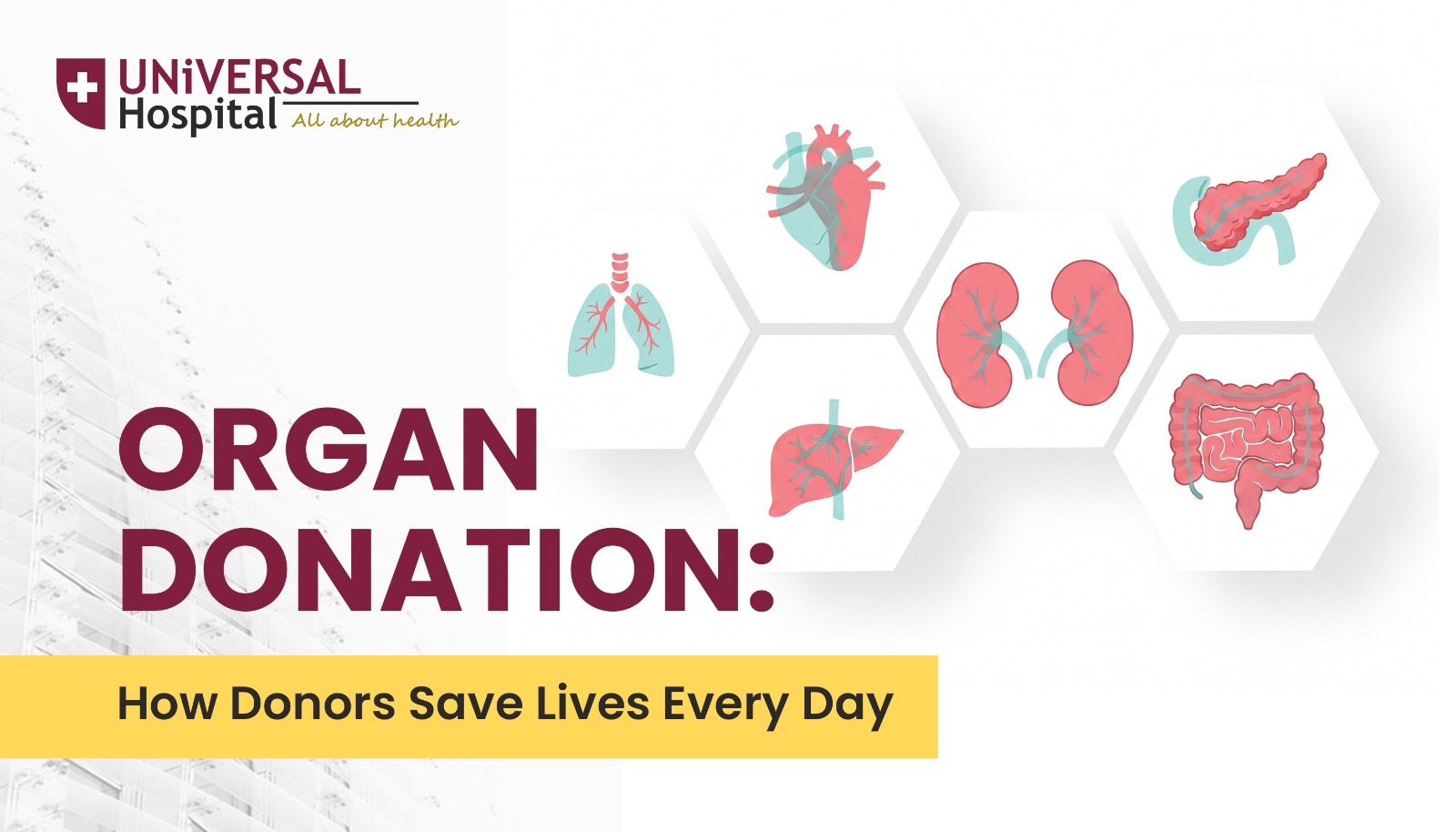
An organ donor may donate:
- Kidneys
- Liver
- Heart
- Lungs
- Pancreas
- Intestines
Tissues that may also be donated include:
- Corneas
- Skin
- Bone
- Heart valves
One donor can potentially save lives and improve the quality of life for many recipients.
Types of Organ Donation
- Living Organ Donation
In some cases, healthy individuals can donate organs while alive.
Common Living Donations
- One kidney
- Part of the liver
The body can continue functioning normally after these donations.
Living donation is carefully evaluated to ensure donor safety.
- Deceased Organ Donation
This occurs after a person is declared brain-dead or after cardiac death under strict medical protocols.
Organs are recovered respectfully and transplanted into recipients waiting for life-saving treatment.
Why Organ Donation Matters
Thousands of patients suffer from:
- Kidney failure
- Liver disease
- Heart failure
- Lung disease
For many, transplantation is the only effective treatment option.
The Impact of Organ Donation
Organ donation can:
- Save multiple lives
- Restore vision
- Improve mobility
- Extend life expectancy
- Reduce suffering for patients and families
It also gives hope to patients waiting for a transplant.
Common Conditions Requiring Organ Transplants
Kidney Failure
Patients with advanced kidney disease often depend on dialysis until a donor kidney becomes available.
Liver Failure
Severe liver diseases such as cirrhosis or hepatitis-related damage may require liver transplantation.
Heart Failure
Patients with end-stage heart disease may need a heart transplant to survive.
Lung Diseases
Advanced lung conditions such as pulmonary fibrosis or COPD can require lung transplantation.
Who Can Become an Organ Donor?
Many people believe they are too old or unhealthy to donate. In reality, organ donation eligibility depends on medical evaluation.
General Eligibility
Almost anyone can register as an organ donor.
Doctors evaluate:
- Organ health
- Medical history
- Infection status
- Age and overall condition
There is no strict age limit for donation.
The Organ Donation Process
Understanding the donation process can help families feel more informed and comfortable.
Step 1: Register as an Organ Donor
People can voluntarily register for organ donation through official programs or donor registries.
Discussing your decision with family members is also important.
Step 2: Medical Evaluation
If organ donation becomes possible, doctors assess:
- Organ function
- Compatibility
- Infection screening
Only healthy organs suitable for transplantation are used.
Step 3: Matching Donors and Recipients
Organs are matched based on:
- Blood group
- Tissue compatibility
- Medical urgency
- Waiting time
This ensures fair and effective transplantation.
Step 4: Organ Recovery Surgery
The organs are surgically removed with dignity and respect.
The donor’s body is carefully reconstructed afterward.
Step 5: Transplant Surgery
The donated organs are transported quickly to recipients for transplantation.
Timing is critical because organs must remain healthy for successful transplant outcomes.
Myths and Facts About Organ Donation
Many misconceptions prevent people from becoming donors.
Myth 1: Doctors Won’t Try to Save Donors
Fact:
Medical teams always prioritize saving the patient’s life first.
Organ donation is considered only after all life-saving efforts fail.
Myth 2: Organ Donation Disfigures the Body
Fact:
Donation surgeries are performed respectfully by trained surgeons.
Families can still arrange traditional funeral services.
Myth 3: Older People Cannot Donate
Fact:
Organ health matters more than age.
Even elderly donors may successfully donate tissues or organs.
Myth 4: Religion Does Not Support Organ Donation
Fact:
Most major religions support organ donation as an act of compassion and humanity.
Emotional Impact of Organ Donation
Organ donation changes lives not only medically but emotionally.
For Recipients
Recipients often regain:
- Energy
- Independence
- Improved quality of life
- Hope for the future
For Donor Families
Many donor families find comfort knowing their loved one helped others survive.
Organ donation creates a lasting legacy of kindness and humanity.
The Role of Awareness in Saving Lives
A lack of awareness is one of the biggest barriers to organ donation.
Increasing education helps:
- Reduce myths and fear
- Encourage donor registration
- Improve transplant success rates
- Support families during difficult decisions
Conversations about donation can save lives.
Organ Donation and Ethical Practices
Ethical standards are extremely important in transplantation.
Ethical Principles Include:
- Voluntary consent
- Transparency in allocation
- Medical fairness
- Respect for donor dignity
Trusted transplant centers follow strict legal and ethical guidelines.
Recovery After Organ Donation
Living donors usually recover well with proper medical care.
Recovery Tips for Living Donors
- Adequate rest
- Healthy diet
- Follow-up medical visits
- Gradual return to normal activities
Most living donors return to healthy, active lives after recovery.
People also may know about Living Donors: Living Donor Transplant: A Life-Saving Gift of Hope
How Families Can Support Organ Donation
Families play an important role in donation decisions.
Helpful Steps Include:
- Discuss donation wishes openly
- Understand the donor’s intentions
- Seek counseling if needed
- Learn about the transplant process
Supportive families help make the donation process smoother and more meaningful.
Why Choose Universal Hospital for Transplant Services?
Choosing the right hospital is essential for safe and successful transplantation.
Universal Hospital Surat offers trusted and advanced Transplant Services with a patient-centered approach.
Expert Transplant Specialists
Universal Hospital has experienced teams specializing in:
- Kidney transplant
- Liver transplant
- Organ failure management
- Post-transplant care
Patients receive comprehensive treatment tailored to their condition.
Advanced Medical Infrastructure
The hospital provides:
- Modern operation theatres
- Advanced ICU facilities
- High-end diagnostic technology
- Infection-controlled transplant units
These facilities support safer transplant procedures and recovery.
Ethical and Transparent Care
Universal Hospital follows strict ethical transplant protocols.
Patients and families receive:
- Honest communication
- Proper counseling
- Transparent evaluation processes
- Emotional support throughout treatment
Comprehensive Recovery and Follow-Up
Transplant care does not end after surgery.
Universal Hospital supports patients with:
- Nutritional counseling
- Medication management
- Long-term follow-up care
- Rehabilitation and monitoring
This holistic approach improves long-term transplant success.
Compassionate Support for Patients and Families
Organ transplantation is emotionally challenging.
Universal Hospital focuses on:
- Empathy-driven care
- Psychological support
- Family guidance
- Personalized attention at every stage
Patients are treated with dignity, respect, and compassion.
Become a Lifesaver Through Organ Donation
One decision can change many lives.
By becoming an organ donor, you can offer hope, healing, and a second chance to patients battling severe organ failure.
Awareness, education, and compassionate healthcare can help create a future where fewer patients die waiting for transplants.
👉 Learn more about organ donation and transplant care at Universal Hospital Surat
👉 Consult experienced transplant specialists
👉 Explore advanced and ethical Transplant Services
Choose Universal Hospital for trusted transplant care — because every donated organ has the power to save lives.
📍 Universal Superspeciality Hospital beside Jash Infinity, Behind New SMC Building, Civil Cross Road, Khatodara, Surat, India, 395001
📞 +91 90810 82632
🌐 www.universalhospitalsurat.com
